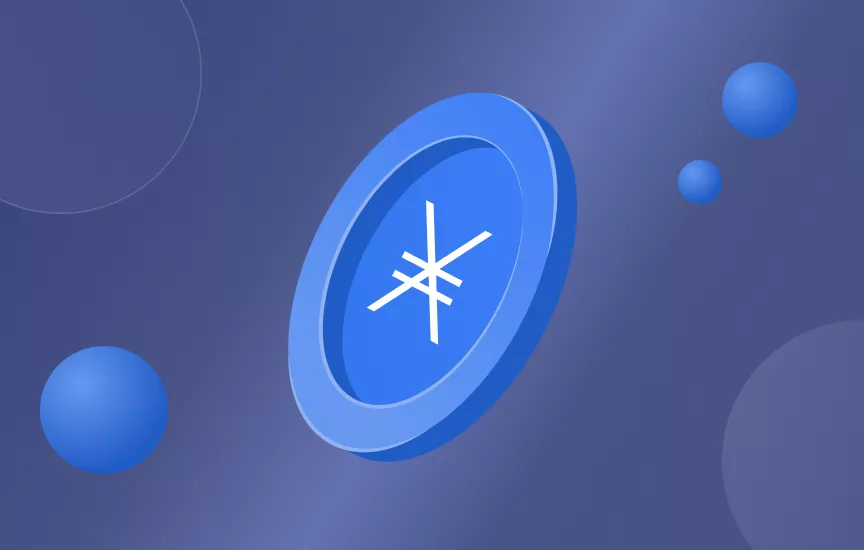
While Bitcoin and Ethereum dominate headlines, a groundbreaking cryptocurrency has quietly revolutionized how we think about digital payments: Nano. Originally called RaiBlocks, Nano eliminates transaction fees and confirms payments instantly—solving two of blockchain's biggest problems. This comprehensive guide explores Nano's technology, advantages, use cases, and why it matters for the future of finance.
What is Nano (XNO)?
Nano is a cryptocurrency designed from the ground up to be a fast, secure, and scalable digital payment system. Unlike Bitcoin's 10-minute block times and high transaction fees, Nano delivers instant transactions with zero fees.
Key Facts:
- Ticker: XNO (formerly NANO, previously Rai)
- Max Supply: 133,248,290 XNO (fixed, no inflation)
- Transaction Speed: Instant (milliseconds)
- Transaction Cost: $0 (completely feeless)
- Launch: October 2014 (as RaiBlocks)
- Technology: Directed Acyclic Graph (DAG)
The Problem Nano Solves
Bitcoin's Limitations
While Bitcoin revolutionized cryptocurrency, it has critical limitations for payments:
- High Fees: Transaction fees average $5-50 during peak times
- Slow Confirmations: Takes 10 minutes to 1+ hour for confirmation
- Energy Intensive: Proof of Work requires massive computing power
- Limited Scalability: Can only handle ~7 transactions per second
Ethereum's Trade-offs
Ethereum improved speed but introduced other problems:
- Still requires significant gas fees
- Network congestion causes delays and higher costs
- Complex smart contract ecosystem adds complexity
Nano's Solution
Nano addresses all these issues with a revolutionary architecture.
How Nano Works: DAG Technology
Nano doesn't use traditional blockchain. Instead, it uses a Directed Acyclic Graph (DAG) structure called Block-lattice.
Traditional Blockchain
In Bitcoin and Ethereum:
- All transactions are bundled into blocks
- Blocks are chained sequentially
- Miners compete to add the next block
- The entire network must reach consensus on each block
Nano's Block-Lattice
In Nano:
- Each account has its own blockchain
- Account owners create their own blocks
- No miners needed—users validate their own transactions
- Transactions are confirmed individually, not bundled
- The network doesn't need to reach consensus on every transaction
Visual Structure:
Traditional Blockchain:
Block 1 → Block 2 → Block 3 → Block 4
(All transactions bundled, linear chain)

Nano Block-Lattice:
Account A: A1 → A2 → A3 → A4
Account B: B1 → B2 → B3
Account C: C1 → C2
(Each account is its own chain)
Transaction Process in Nano
Step 1: User Creates Block
When you send Nano, you create two blocks:
- Send Block - From your account (debits your balance)
- Receive Block - The recipient accepts it (credits their balance)
Step 2: Instant Confirmation
The transaction is cryptographically complete once both blocks are created. No waiting for miners or network consensus.
Step 3: Representative Validation
Representative nodes validate the transaction to prevent double-spending. This happens asynchronously and doesn't slow down the transaction.
Step 4: Final Settlement
Once representatives validate it, the transaction is permanently recorded. The entire process takes milliseconds.
Why Nano is Feeless
Nano eliminates transaction fees because:
No Mining Rewards
There are no miners competing for block rewards. Users validate their own transactions.
Efficient Design
Each transaction requires minimal computational resources:
- Small block size (~300 bytes)
- No complex consensus mechanism
- Simple validation algorithm
Network Security
Security comes from:
- Open Representative Voting (ORV) - Token holders vote for validators
- Cryptographic Proof - Each block is cryptographically signed
- Economic Incentive - Representatives act honestly to maintain the network
Open Representative Voting (ORV)
Nano's consensus mechanism is unique and elegant:
How It Works:
- Nano holders vote for representative nodes
- Representatives validate transactions and vote on their legitimacy
- A transaction is confirmed when representatives holding >50% of voting power agree
- No energy-intensive mining required
Advantages:
- Energy Efficient - Doesn't require Proof of Work
- Decentralized - Token holders control the network
- Democratic - Anyone can become a representative
- Accountable - Bad actors lose voting power
Nano vs Bitcoin vs Ethereum
| Feature | Nano | Bitcoin | Ethereum |
|---|---|---|---|
| Transaction Speed | Instant | 10 minutes | 12 seconds |
| Transaction Fee | $0 | $5-50+ | $1-100+ |
| Scalability (TPS) | 1000+ | 7 | 30 |
| Energy Use | Minimal | Extreme (PoW) | High (Staking) |
| Consensus | ORV | Proof of Work | Proof of Stake |
| Smart Contracts | No | No | Yes |
Nano's Advantages
1. Feeless Transactions
Send any amount of Nano to anyone, anywhere, with zero transaction fees. Perfect for micropayments, remittances, and everyday transactions.
2. Instant Settlement
Transactions confirm in milliseconds, not minutes. Ideal for point-of-sale systems and real-time payments.
3. Energy Efficient
Nano uses approximately 600,000x less energy than Bitcoin per transaction. Environmentally sustainable cryptocurrency.
4. Highly Scalable
Can handle 1000+ transactions per second, compared to Bitcoin's 7 TPS. No network congestion.
5. Decentralized
Anyone can run a node or become a representative. No central authority or mining monopolies.
6. User-Friendly
Simple, intuitive wallets and straightforward technology. No complex gas calculations or contract deployment.
Nano's Limitations
No Smart Contracts
Nano focuses purely on payments. It doesn't support programmable contracts like Ethereum. This is by design—keeping it simple and fast.
Smaller Ecosystem
Nano has less adoption and fewer merchant integrations than Bitcoin or Ethereum. The ecosystem is growing but still relatively small.
Less Recognition
Despite its technological superiority, Nano is less well-known. Most people haven't heard of it compared to Bitcoin.
Quantum Computing Risk
Like all cryptocurrencies, Nano faces potential threats from quantum computing in the distant future.
Real-World Use Cases
1. Point-of-Sale (POS) Payments
Nano's instant, feeless transactions make it perfect for retail payments at checkout.
2. International Remittances
Send money globally instantly without expensive intermediaries or fees.
3. Micropayments
Nano enables payments as small as a fraction of a cent—impossible with traditional payment systems.
4. Gaming and Tipping
Reward content creators instantly with feeless Nano tips.
5. IoT Transactions
Devices can transact autonomously with zero fees—perfect for machine-to-machine payments.
Nano Wallets
Official Wallets:
- Nault - Web wallet with full features
- Natrium - Mobile wallet (iOS/Android)
- Nano Vault - Local, offline-first wallet
Hardware Wallet Support:
- Ledger Nano S/X
- Full compatibility with standard hardware wallets
The Nano Network
Node Types:
- Full Nodes - Store entire ledger, validate all transactions
- Light Nodes - Reduced resources, delegates validation to representatives
- Representative Nodes - Vote on transaction validity
Network Statistics:
- Average block confirmation: 0.1 seconds
- Network capacity: 1000+ TPS
- Node count: 200+ active nodes globally
Nano's Price and Market Position
Despite superior technology, Nano's market cap ranks outside the top 50 cryptocurrencies. This presents both risks and opportunities:
Challenges:
- Lower liquidity than major coins
- Fewer exchange listings
- Less mainstream adoption
Opportunities:
- Potential for growth as awareness increases
- First-mover advantage in feeless, instant payments
- Strong technical fundamentals attract developers
Nano Adoption and Merchants
Growing list of merchants accepting Nano:
- TravelbyBit - Travel booking with Nano payment
- Various online retailers and services
- Tipbots and payment platforms
Adoption Challenges:
- Merchant education and integration
- Regulatory clarity needed
- Marketing and awareness campaigns
The Future of Nano
Potential Developments:
- Nano 2.0 - Protocol improvements and upgrades
- Layer 2 Solutions - State channels for instant settlement
- Enterprise Adoption - Integration with payment processors
- Mobile Wallets - Improved UX for mainstream users
Vision:
Nano aims to become the go-to digital currency for instant, feeless transactions globally. Its focus is solving real payment problems, not creating complex financial systems.
How to Get Nano
Step 1: Create a Wallet
Download Natrium (mobile) or access Nault (web).
Step 2: Buy Nano
Purchase on exchanges like Binance, Kraken, or Upbit.
Step 3: Send to Your Wallet
Transfer from exchange to your personal wallet for security.
Step 4: Use It
Send Nano instantly to anyone, anywhere, for free.
Nano and IoT Integration
Nano is particularly suited for Internet of Things applications:
- Energy Efficiency - Perfect for battery-powered IoT devices
- Instant Settlement - Enables real-time machine-to-machine payments
- Feeless - Makes micropayments economically viable
- Lightweight Protocol - Runs on minimal hardware resources
This makes Nano ideal for ESP32 and Arduino-based payment systems—exactly what our hardware projects focus on!
Nano vs Other Payment Coins
How Nano compares to other payment-focused coins:
- Litecoin - Faster than Bitcoin but slower than Nano, has transaction fees
- Monero - Privacy-focused, not optimized for speed
- Ripple (XRP) - Centralized decision-making, less decentralized
- Cardano - More complex, focused on smart contracts
Risks and Considerations
Technical Risks:
- Potential security vulnerabilities in protocol
- Smaller network may be more vulnerable to attacks
- Regulatory uncertainty
Market Risks:
- Lower liquidity can cause price volatility
- Limited merchant adoption
- Possible regulatory challenges
Mitigation:
- Strong development team and community
- Regular security audits
- Growing merchant partnerships
Conclusion
Nano represents a paradigm shift in cryptocurrency design. By focusing exclusively on being a fast, feeless payment system, it solves problems that Bitcoin and Ethereum don't address.
While Nano may never replace Bitcoin or Ethereum—which serve different purposes—it offers the best solution for peer-to-peer digital payments. Whether you're sending micropayments, conducting international transfers, or building IoT payment systems, Nano delivers unmatched speed, cost, and efficiency.
The cryptocurrency landscape is evolving rapidly. As more people discover Nano's advantages and developers build innovative applications around it, we may witness a shift toward feeless, instant digital payments becoming the norm.
For makers and developers, Nano opens exciting possibilities. Imagine ESP32 devices transacting autonomously with zero fees, or payment terminals confirming sales instantly. That future is available today with Nano.
What will you build with Nano? Explore our hardware projects section for innovative ideas combining crypto and embedded systems! 🚀